
 Written ByJamie
- Why Lens Tint Matters on a Golf Course
- Green Tints: My Pick for the Best All-Around Golf Lens
- Amber Tints: Extra Contrast for Flatter, Softer Light
- Rose and Copper Tints: Maximum Contrast, Not for Every Eye
- Grey and Smoke Tints: Why I Skip Them for Golf
- What the Research Says, and Where I Land
- VLT and Matching Tint to Conditions
- Polarization Is a Separate Decision
- Best Lens Color for Golf: Comparison Table
- FAQ
- Bottom Line
The best lens color for golf sunglasses is an often overlooked detail. One I rank above frame selection.
Two pairs can have identical coatings and polarization, but if one is tinted grey and the other green or amber, they'll perform differently against green turf.
What the sources say — and where we differ.
The vision and lens experts lean toward warmer tints: the American Academy of Ophthalmology points to rose and brown, and ZEISS's golf research to purple and amber, as the tints that best separate a white ball from green turf — and they treat grey as a lens that mainly dims the scene without adding contrast.
Where I differ (a little): Across years and years and years and years of rounds wearing different color tints, green belongs right at the top — neck-and-neck with amber and rose.
I find green lenses make colors “pop” a bit more and sharpen the ball against the turf while maintaining superb clarity and excellent glare protection. Rose and amber sit close behind.
The one call we won't hedge: skip grey for golf. (Full sourcing and our reasoning are below.)
Why Lens Tint Matters on a Golf Course
You need a good level of clarity, brightness, and contrast to see subtle breaks and grain when putting, chipping, pitching, or even hitting bunker shots.
It even matters when you’re choosing a target, or trying to find a flag when hitting full shots too.
That’s why I never wear grey tinted sunglasses or wear excessively dark sunglasses.
I want my world to appear brighter and crisper, yet I want my eyes to relax.
The tints mentioned above work everywhere: on the course, while driving, at the weekend barbecue.
Green Tints: My Pick for the Best All-Around Golf Lens
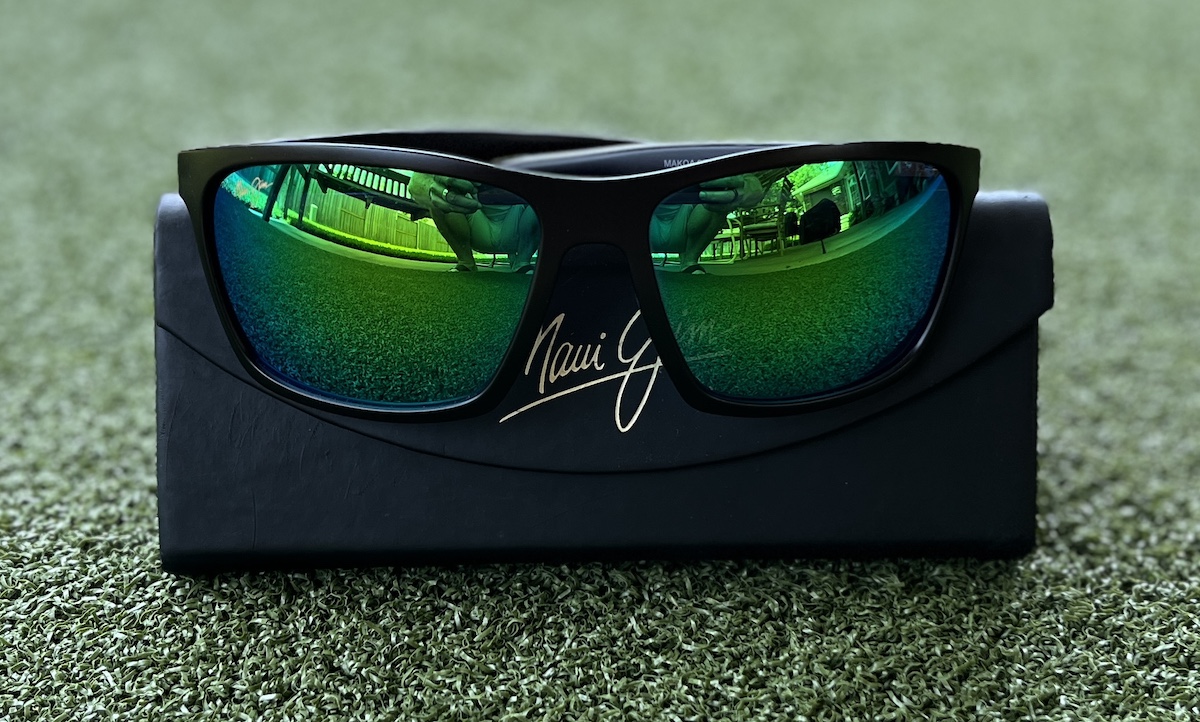
Amber and Rose tinted lenses are superb and I wear them from time to time. Scheyden Loopers are an example of amber-type tinted lenses and I’m a certified fan.
But, I still reach for my Maui Jim Makoas often for everyday wear and for the course.
Green keeps the ball cleanly separated from the turf while the colors stay natural. The grass still looks like grass, yardage markers and scorecards stay easy to read, and your eyes aren't fighting an orange cast for four-plus hours.
If you want one pair built around performance rather than styling alone, Scheyden golf-specific frames are built by opticians who tune the lens tint specifically for ball tracking and green reading.
They're my go-to recommendation for golfers who want to buy once and stop thinking about it (see my Scheyden Looper review).
Amber Tints: Extra Contrast for Flatter, Softer Light
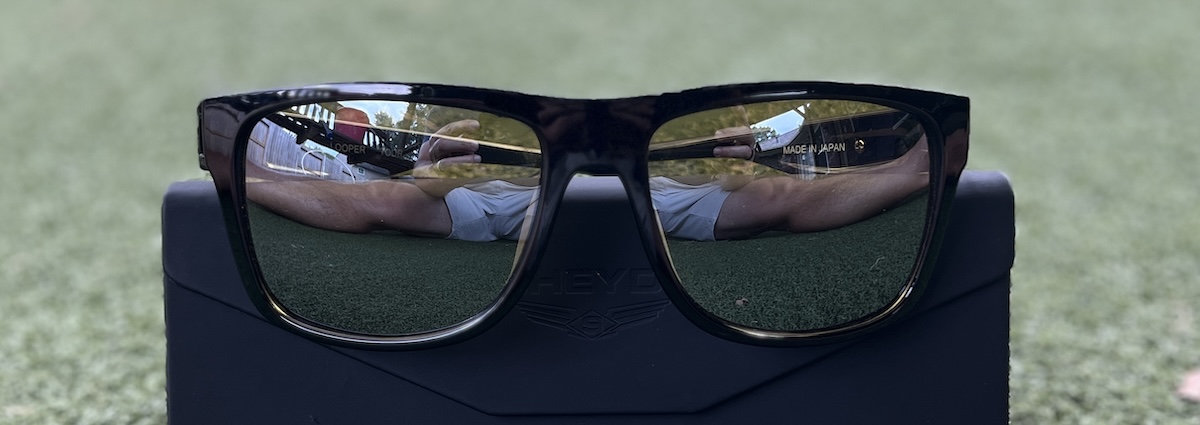
Amber, along with its close cousin brown, is the next tint to consider and the one to lean toward when the light goes flat.
Amber filters out blue light, which scatters easily and adds haze, so it pushes contrast harder than green does.
On overcast days, in early-morning or late-afternoon light, or any time the course looks washed out, an amber lens makes the ball and the grain of the green stand out.
The tradeoff is a warmer color cast, with everything taking on a slightly golden tone. Most golfers adjust to it quickly and many prefer it, but if you want colors to stay true, that cast is why green edges it out for the top spot.
As a contrast tint for all conditions, amber is still excellent, and it's a great choice if you mostly play in softer light.
Rose and Copper Tints: Maximum Contrast, Not for Every Eye
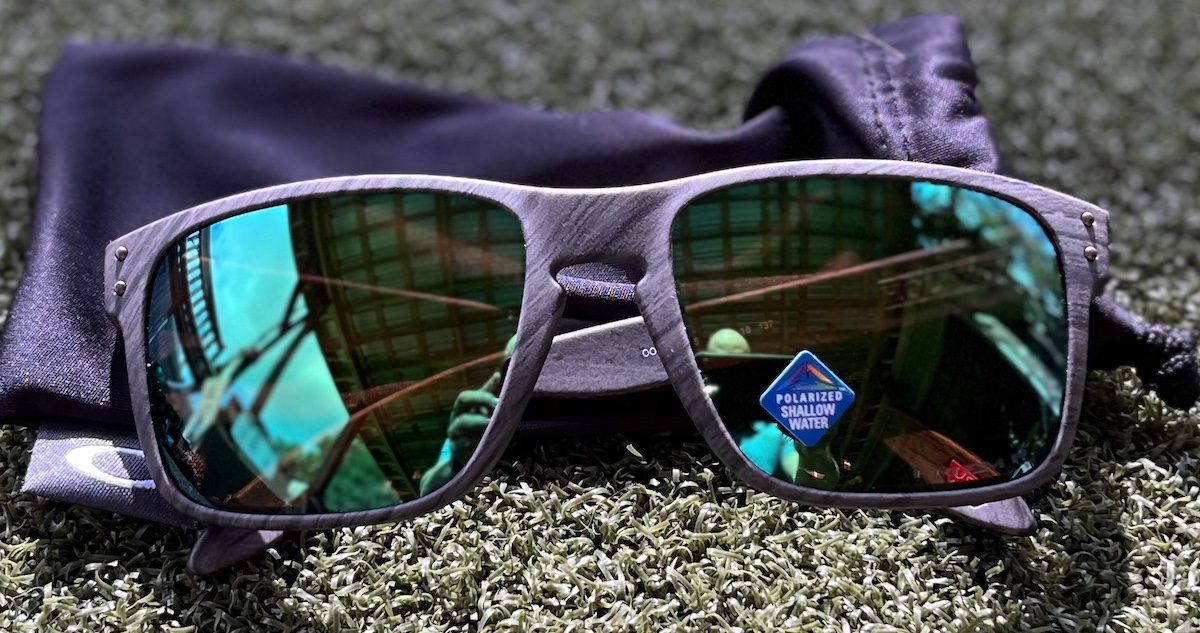
Rose and copper are the most aggressive contrast tints in golf.
They filter blue light hard and make a white ball pop against green grass, the same logic that has made rose and copper the go-to tint for hunters and clay shooters tracking a small object against foliage.
Oakley's Prizm Golf tint is the most recognizable example of this kind of contrast tuning, and my Oakley Holbrook Prizm review covers how it reads on course.
They land third on my list for one reason, which is that the strong color shift isn't for everyone.
Some golfers find rose and copper oversaturated or tiring over a long round, and the heavy warm cast can make true color on and around the green feel less natural than it does through green or amber glass.
Grey and Smoke Tints: Why I Skip Them for Golf
Grey (sometimes called smoke) is the default tint for general-purpose sunglasses, and that's exactly the problem on a golf course.
Grey lenses don't shift color. They dim everything evenly, which is great for true-color accuracy behind the wheel but does nothing for the ball-against-grass contrast that golf demands.
Because grey doesn't filter selectively, the ball and the grass behind it stay closer in tone than they would through a green, amber, or rose lens.
That's the opposite of what you want when you're tracking a shot or reading grain on a green.
Even on the brightest days, a darker green or amber lens (lower VLT) will serve you better than grey, so for golf specifically, grey is the tint I'd skip.
What the Research Says, and Where I Land
Vision and lens authorities agree that tint drives contrast on the course, and they lean warm. The American Academy of Ophthalmology says "brown or rose-colored lenses provide extra contrast, which is helpful to athletes who play sports such as golf," and notes that UV protection comes from the lens's 100% UV rating, not the tint's color or darkness.
ZEISS's golf-lens research found "purple or yellow-orange tints" best for enhancing contrast on greens and reading breaks. All About Vision notes that amber, copper, and brown "filter high amounts of blue light to help heighten contrast," whereas grey "reduce[s] overall brightness while preserving 100 percent normal color perception." In other words, grey dims without adding contrast.
That warm lean is also why Oakley builds Prizm Golf on a rose base tint rather than a neutral one.
Opinions still vary. Notice that those experts name purple, rose, and amber, not green, and there's no industry consensus on a single best tint. Every maker tunes its green, amber, and rose lenses differently, so results depend on the specific lens and not just the color name.
My recommendation comes from experience. On the course, green and amber run neck and neck for me, and which one wins depends on light conditions for the day and also my mood.
Green doesn't offer maximum contrast (but still offers superb contrast), but it sharpens the ball against turf while keeping color natural and comfortable over a full round.
Rose and copper are close behind, and grey is the one tint I consistently skip for golf.
VLT and Matching Tint to Conditions
Visible Light Transmission (VLT) is the percentage of light that actually passes through the lens, so a lower VLT means a darker lens. Tint color and VLT are two separate decisions:
- Bright, sunny days: lower VLT (darker lens). A darker green or copper handles high glare without giving up the contrast you need.
- Overcast or low-light rounds: higher VLT (lighter lens) so you don't lose definition. Light green or amber tints tend to hold contrast well here.
- Changeable conditions (cloud in and out, morning-to-afternoon rounds): this is where photochromic (transition) lenses earn their keep. They darken and lighten automatically as the light changes, so you're not swapping glasses, or squinting through the front nine and losing visibility on the back.
A lens that's too dark for the conditions makes greens and yardage markers harder to read, and one that's too light doesn't give you real glare protection. Matching VLT to the day matters as much as picking the right tint family.
Polarization Is a Separate Decision
Lens tint and polarization solve different problems. Tint is about contrast and how colors appear, while polarization cuts glare bouncing off water, cart paths, and wet grass.
You can get a green or amber lens polarized or non-polarized, and the choice has real tradeoffs for golf specifically, including the way polarized lenses can occasionally interact with distance-finder screens. I cover when polarized makes sense and when it doesn't in my guide to polarized vs. non-polarized golf sunglasses.
Best Lens Color for Golf: Comparison Table
| Lens Color | Best Use / Conditions | Contrast on Grass | Notes |
|---|---|---|---|
| Green | Bright to flat light; all-around golf, natural color | High | My top all-around pick |
| Amber / Brown | Flatter or softer light; extra contrast | High | Best when the course looks washed out |
| Rose / Copper | Bright light; maximum contrast | High | Punchy, but can feel oversaturated |
| Photochromic | Changeable/mixed light rounds | Varies (adapts) | Auto-adjusts VLT as light shifts |
| Grey / Smoke | Not recommended for golf | Low | Only dims, which flattens ball-vs-grass contrast |
FAQ
What color lens is best for golf?
For most golfers, a green tint is the best all-around lens. It sharpens the contrast between ball and grass while keeping colors natural and comfortable over a full round. Amber is next for flat or overcast light, and rose or copper give the most aggressive contrast if you like a punchy look. I'd skip grey for golf, because it only dims the view and flattens the contrast you need.
Are rose or amber lenses better for golf?
Amber generally edges out rose for golf. Both are warm tints that enhance contrast, but amber's color shift is a little easier to live with over 18 holes, while rose and copper push contrast hardest and can feel oversaturated. Both beat grey, and neither beats a good green lens as an all-around pick.
What sunglasses help you see the ball better?
Sunglasses with a contrast-enhancing tint (green, amber, or rose) make a white ball easier to see against green grass because they boost contrast instead of just dimming the scene. Green is the best all-around choice. Avoid flat grey lenses, which mute that contrast, and pair your tint with a VLT suited to the day's brightness for the clearest view.
Do I need different lenses for cloudy vs. sunny rounds?
Ideally, yes, or a photochromic lens that adjusts automatically. A lens dark enough for a bright afternoon can feel too dark on an overcast morning, and vice versa. If you only own one pair, a medium-VLT green or amber lens is a reasonable compromise for all conditions.
Does lens color affect how well I read greens?
Yes. Contrast tints like green and amber make subtle changes in grass color and texture, such as grain direction, moisture, and mower lines, easier to see, and that helps you read greens. Flat grey lenses do the opposite and mute those cues, which is why I don't recommend them for golf.
Bottom Line
Lens > Frames (but frames are still very important).
Green gives you the best all-around mix of contrast and natural color for tracking the ball and reading greens; amber is the move when the light goes flat, and rose or copper deliver the most aggressive contrast if your eyes like it.
The one tint to skip is grey — it only dims the view.
From there, match VLT to how bright your usual rounds are, and treat polarization as its own separate call — start with our best golf sunglasses roundup if you're still narrowing down a full pair.
Get the tint right and the rest is easy — the best lens color for golf sunglasses is the one that makes your ball pop while relaxing your eyes and maintaining perfect clarity.