
 Written ByJamie
- What Polarized Lenses Actually Do On The Course
- The Case Against Polarized: Reading Greens
- Non-Polarized Golf Sunglasses: When They're the Smarter Choice
- Polarized vs. Non-Polarized Golf Sunglasses: Quick Comparison
- Does Lens Tint Matter As Much As Polarization?
- What GPS/Rangefinder & Phone Screen Interference Looks Like
- What The Research Says vs. Our Take
- So, Are Polarized Sunglasses Good for Golf? Our Verdict
- FAQ
- Conclusion
Are polarized sunglasses good for golf? I always assumed the answer was “yes” and also, what a dumb question.
I mean, why wouldn’t they be? I’ve worn polarized sunglasses since I was 18 or so and I started playing golf 5 years later.
I never noticed a problem…at all.
Then, I started reviewing sunglasses for Golfer Geeks and studying the subject a bit. I read how they were bad for golf because they caused distortions, or at least, obstructed certain details in green reading.
What? I never experienced this in the least.
But, it’s a thing, and not just one source either. So, here we go.
TLDR: Polarized sunglasses are good for golf for most shots — they cut glare off cart paths, water, and sand, and they reduce eye fatigue over a full round.
The catch is reading greens: polarization can flatten subtle grain and wetness cues on the putting surface, which is why some low-handicap players deliberately choose non-polarized or lightly polarized lenses instead.
Many golfers end up happy wearing polarized glasses tee-to-green and simply pulling them off (or switching to a non-polarized pair) once they're on the putting surface.
What Polarized Lenses Actually Do On The Course

Polarized lenses have a chemical filter laminated into them that blocks horizontally scattered light — the specific kind of glare that bounces off flat, reflective surfaces.
On a golf course, that's cart paths in full sun, water hazards, wet fairways after morning dew, and the top of a sand bunker at midday. Cut that glare and your eyes stop squinting and straining, which matters over four-plus hours outside.
We notice the difference most on bright-sky days with a lot of hardscape and water in play.
Depth perception off the tee generally improves too, because you're not fighting a wash of reflected light to find contrast between the fairway and the rough.
If you play a lot of coastal or desert courses where sun and reflective terrain are constant, polarized lenses are close to a no-brainer for the tee shot and approach.
Polarized pairs like the Oakley Holbrook Prizm or the water-tuned Costa Whitetip are built around exactly that glare-cutting job.
The Case Against Polarized: Reading Greens
Polarization works by selectively blocking light, and that selective blocking can also mute some of the very subtle visual information you rely on to read a green — grain direction, standing water, and the faint sheen difference between a wet spot and a dry one.
A lot of players who spend serious time practicing greens report that polarized lenses make the putting surface look flatter and more uniform than it actually is.
Slight ridges and grain patterns that show up as subtle light-and-shadow shifts to the naked eye can get smoothed over by the lens. It's not that polarized lenses lie to you — it's that they filter out some of the glare-adjacent information that overlaps with the cues you actually want to keep.
This is anecdotal and it doesn't affect every golfer the same way — plenty of low-handicap players wear polarized lenses their entire round with no complaints.
But it's common enough that you'll see it come up constantly in GolfWRX threads and Reddit's r/golf: players who play well with polarized lenses off the tee but pull them off, push them up, or switch to a non-polarized pair once they're reading a breaking 20-footer.
Non-Polarized Golf Sunglasses: When They're the Smarter Choice
Non-polarized lenses still block UV and can still be tinted for contrast, but they don't filter that horizontal glare.
That means you keep the full, unfiltered texture of the green — grain, moisture, subtle slope shadows — right up until the moment glare actually becomes a problem.
Non-polarized is the better call if:
- You play mostly overcast conditions or morning/late-afternoon rounds where hard glare isn't the main issue.
- You're a serious green-reader who wants every possible visual cue intact on the putting surface.
- You use a phone screen or certain GPS/rangefinder displays constantly during the round (more on that below).
- You've personally noticed depth or contrast issues with polarized lenses and just play better without them.
If you're a high-handicapper mostly worried about comfort and eye strain over 18 holes, this distinction matters less — polarized will probably serve you well everywhere on the course, greens included.
Polarized vs. Non-Polarized Golf Sunglasses: Quick Comparison
| Polarized | Non-Polarized | |
|---|---|---|
| Glare reduction (cart paths, water, sand) | Excellent | Moderate (tint-dependent) |
| Eye fatigue over a full round | Lower | Slightly higher in bright conditions |
| Reading greens (grain, wetness cues) | Can flatten subtle detail | Preserves full surface texture |
| GPS/rangefinder & phone screen visibility | Can interfere with some LCD/LED screens | No interference |
| Best for | Sunny, reflective courses; tee-to-green comfort | Serious green-readers; overcast rounds; heavy device use |
Does Lens Tint Matter As Much As Polarization?
Polarization is only half the equation — lens tint (gray, brown, green, amber, rose) changes contrast and how the ball and turf read against each other, independent of whether the lens is polarized. A lot of golfers who dislike polarized lenses for green-reading actually just need a different tint, not necessarily zero polarization.
We cover this in detail in our guide to the best lens color for golf sunglasses, including which tints tend to work best for tracking ball flight versus reading subtle green contours. If polarization is giving you trouble on the greens, try a lighter polarization level with a green or rose-tinted lens before ditching polarized entirely.
What GPS/Rangefinder & Phone Screen Interference Looks Like
This is a real, practical issue. Some LCD and LED screens — GPS watches, rangefinder displays, and phone screens under certain viewing angles — use polarized light themselves.
When your sunglasses are also polarized, the two filters can interact and the screen can appear dim, blacked out, or show a rainbow-tinted pattern depending on the angle you're holding it.
It's not universal — plenty of modern rangefinder and watch displays are unaffected — but if you check yardages constantly and have ever had a screen go strangely dark through your sunglasses, polarization is a likely culprit. Tilting your head or the device usually fixes it in the moment, but it's a legitimate reason some golfers skip polarized lenses altogether.
What The Research Says vs. Our Take

What the experts say: Polarized lenses work with a chemical filter that blocks horizontally-scattered light — the specific glare that bounces off flat, reflective surfaces like water, wet grass, cart paths, and sand — according to the American Academy of Ophthalmology and Zeiss’s lens engineers.
Both sources note that cutting glare also reduces eye strain and fatigue over a long day in the sun.
The tradeoff: because many phone, GPS, and rangefinder displays are themselves polarized, lens maker Younger Optics explains that stacking two polarizing filters can make a screen look dark or rainbow-tinted at certain angles, though most modern displays minimize this.
Opinions vary: None of the vision-science or lens-technology sources above weigh in on green-reading specifically — that debate lives almost entirely in player experience and forum threads, not published research.
Our recommendation, from experience: Test both.
Bring a pair of polarized and non-polarized sunglasses you like to the course. Test them side by side while playing or practicing. (I do this a lot now when comparing sunglasses)
Personally, I don’t notice a difference on the course.
I now have a bunch of polarized and non-polarized sunglasses and interchange them depending on mood, how I want to look, and how bright the sun is that day. The fact that a pair is polarized vs non-polarized doesn’t really figure into my decision.
So, Are Polarized Sunglasses Good for Golf? Our Verdict
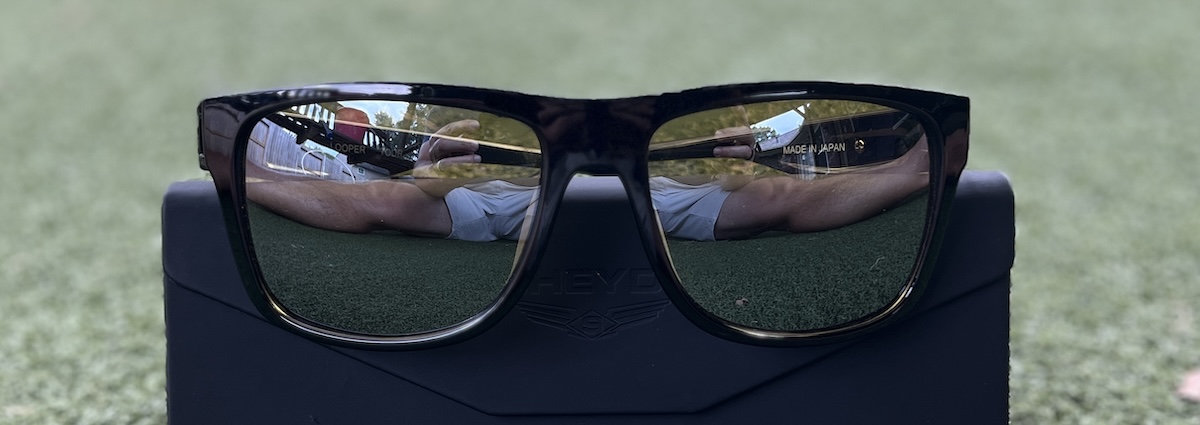
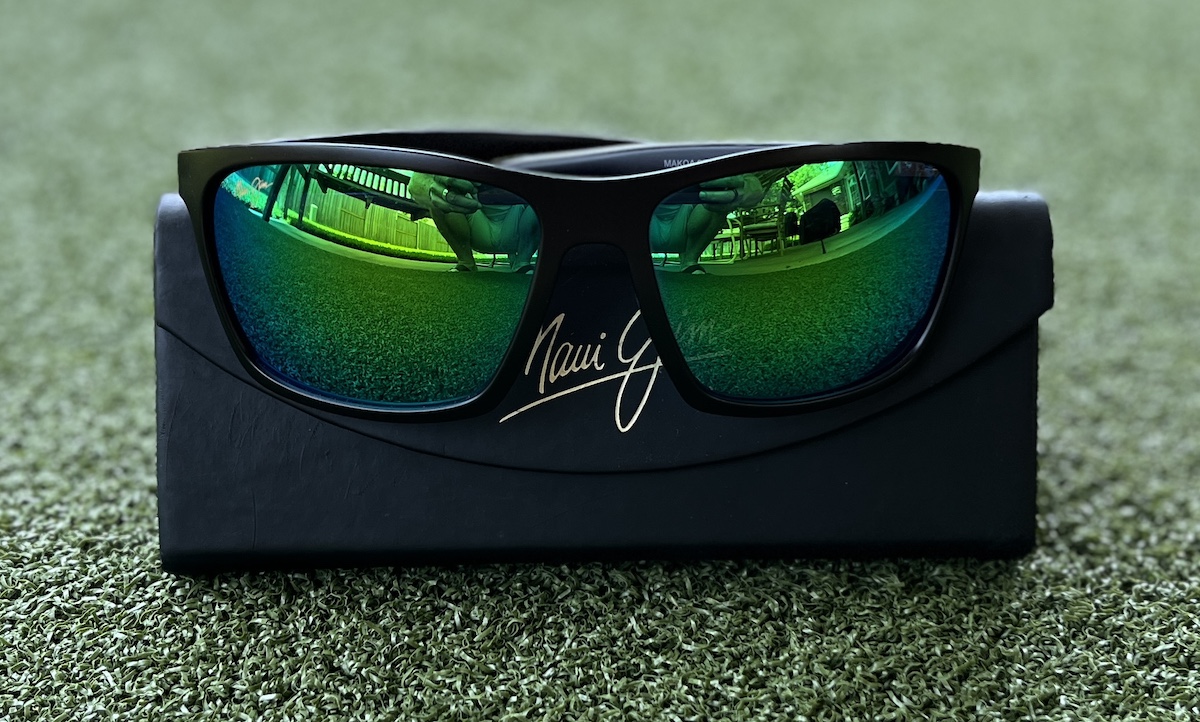
I think polarized sunglasses are fine for golf, but it really depends on your preference and your eyes. I’m fine with them. Apparently, others…not so much.
The only way to know is to test for yourself. I don’t think we have a definitive answer, despite the science mentioned in this article and the sources we cited.
It just so happens that our number one recommended sunglasses aren’t polarized - the Scheyden Loopers. But…I often wear my Maui Jim Makoa polarized sunglasses - no longer sold.
I play fine with both. I see well with both.
You can check out our recommendations on our best golf sunglasses page for our full rankings.
FAQ
Should you wear polarized sunglasses when golfing?
For most of the round, yes — polarized lenses cut glare off cart paths, water, and sand and reduce eye strain over 18 holes. The main exception is green-reading, where some golfers prefer non-polarized or lightly polarized lenses for better surface detail.
Do pros wear polarized sunglasses?
It varies by player. Many tour pros wear polarized sunglasses for full-round comfort, but you'll also see players go without sunglasses entirely on the greens, or swap to a lighter tint, specifically to preserve their read on subtle breaks and grain.
What sunglasses are best for reading greens?
Non-polarized or lightly polarized lenses in a green, rose, or light amber tint tend to preserve the most surface detail for reading greens, since they don't filter out the same glare-adjacent cues that full polarization can mute.
Can polarized sunglasses mess with my rangefinder or GPS watch?
Yes, in some cases. Certain LCD/LED displays use polarized light, and combining that with polarized lenses can make the screen look dim or oddly tinted at certain angles. It's not universal, but it's common enough to be aware of.
Is non-polarized bad for golf?
Not at all — non-polarized lenses still block UV and can still improve contrast with the right tint. They just won't cut horizontal glare as effectively as polarized lenses, which matters most on bright, reflective courses.
Conclusion
Polarized versus non-polarized isn't a right-or-wrong debate — it's a trade-off between glare comfort and green-reading detail.
Start with polarized if comfort and eye fatigue are your priority, and only step down to non-polarized (or a lighter tint) if you notice it's costing you reads on the green.
Test both if you can; your eyes and your putting stats will tell you which one earns a permanent spot in your bag.
But for most golfers wondering are polarized sunglasses good for golf, the answer is yes.