
 Written ByJamie
- Why You Want Hit Your Irons Lower
- What Produces A High & Weak Ball Flight
- Setup Changes That Lower Ball Flight
- Swing Adjustments That Bring The Flight Down
- The Punch Shot And Stinger
- Equipment And Fitting — When To Stop Blaming Your Swing
- Drills For Hitting Your Irons Lower
- Launch Monitor Numbers — What To Track And What To Aim For
The following is my best attempt at explaining how to hit irons lower — for golfers who are tired of watching their iron shots balloon into the wind, get pushed around, come up short, and rarely hit your target.
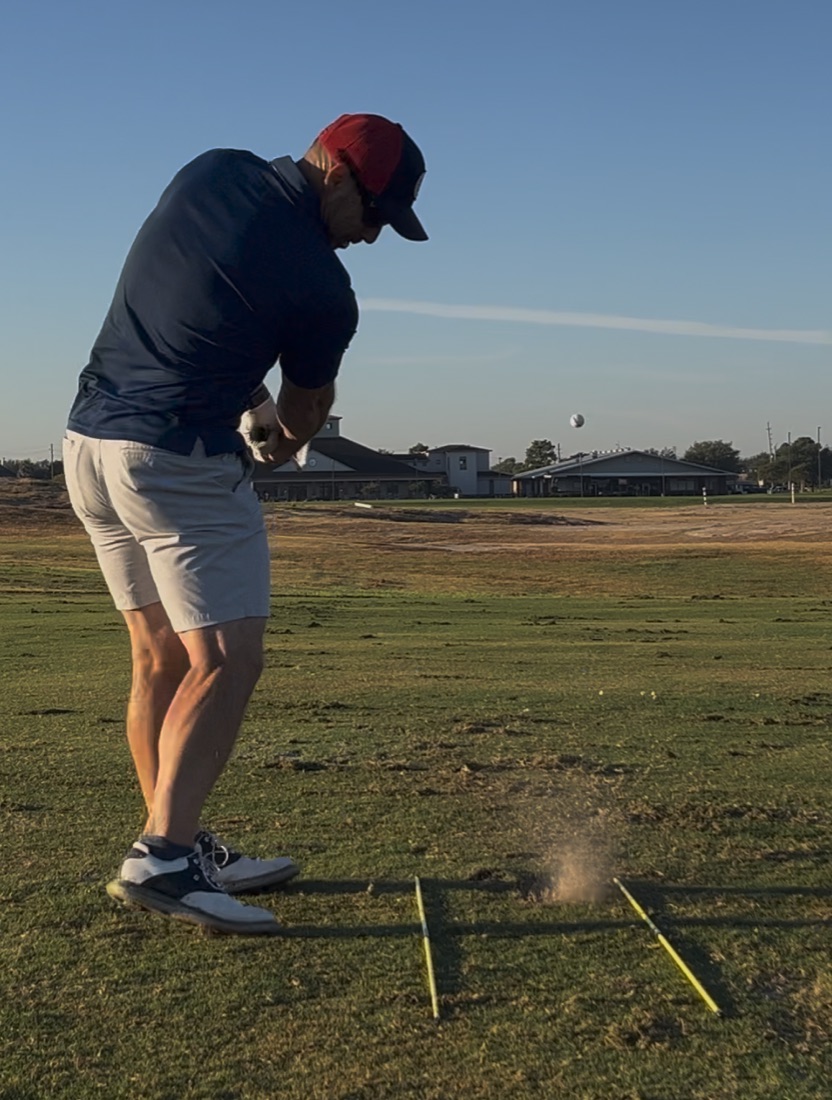
I’m a mere 6.5 handicap and my basic shot is a high penetrating baby draw.
But I can hit a low shot on command and have been doing it for decades now.
You’re not getting my opinion on how to do this. I searched out the best instruction on the web for this guide. Everything in here checks out and will make you a better golfer. (I link to all resources in and below this article)
You’ll hit the ball more solid. You’ll hit the ball farther. You’ll be more accurate. And, you’ll score better.
Oh, you’ll also be able to hit the ball higher on command without having it balloon.
If your irons are ballooning, getting eaten alive by the wind, or just flying higher than they need to, this should help.
And, if you want more instruction on the basics of hitting your irons, we’ve got that too.
Why You Want Hit Your Irons Lower
For me, a high penetrating iron shot is the holy grail and suitable for most conditions – especially calm or relatively calm days with little wind.
Here in Houston, golf isn’t played on calm days very often…rarely in fact.
Being able to flight your irons on a lower, more controlled trajectory gives you two things that directly affect your score:
Control in windy conditions. A lower ball spends less time in the air and gets pushed around less. In a 15 mph headwind, a ballooning 7-iron can lose 15–20 yards of carry. A penetrating one holds its line and lands close to where you aimed.
Course management. A lower flight is your safety valve facing tight corridors, links-style holes, or tree-lined approaches. It takes the big miss out of play and gives you more options when the course demands creativity.
Tour pros rarely hit full-bore shots trying to maximize height. There’s a place for that, but they usually aim for control – height, shape, spin, and distance.
What Produces A High & Weak Ball Flight
Scooping or early release. If your wrists unhinge too early in the downswing — what instructors call “casting” — you’re adding loft at impact instead of compressing the ball.
The clubhead passes your hands before contact, and the result is a weak, high shot with too much spin.
HackMotion’s wrist data confirms this is one of the most common faults among amateur golfers.
Ball position too far forward. When the ball is ahead of your low point, the club is already traveling upward at impact.
That adds dynamic loft and launches the ball higher than the club was designed to hit it.
Weight hanging back. If your weight stays on your trail foot through impact, your trail shoulder drops, your hands flip, and you’re essentially turning your 7-iron into a 9-iron. The ball goes high and short.
Wrong shaft for your swing (MUCH less common). A shaft that’s too flexible or has a soft tip section can add dynamic loft at impact.
As Tom Wishon explains, this mainly affects golfers who load the shaft with higher swing speeds and a later release.
Here’s the quick diagnostic: if your divots are shallow or nonexistent, your hands are behind the ball at impact, and your shots balloon in any kind of wind — it’s almost certainly one of the first three. Fix those before you start blaming equipment.
Setup Changes That Lower Ball Flight
The fastest way to bring your iron flight down doesn’t require a swing overhaul. It starts before you take the club back.
Ball Position — Where It Should Be
For a standard iron shot, most instructors put mid-irons in the center of your stance. To lower the flight, move the ball back about half a ball width to one full ball width toward your trail foot.
What this does is simple: you make contact slightly earlier in the downswing arc, before the club reaches its low point. That naturally reduces dynamic loft by 1–2 degrees and drops your launch angle. The ball comes off lower and with a bit more spin, which is exactly what you want for a penetrating flight.
One caution — move it back too far and you’ll start pushing shots right because the clubface hasn’t fully squared up at impact. A half-ball adjustment is enough for most situations.
Always experiment to find your own sweet spot.
Hands And Shaft Lean At Address
At setup, your hands should be slightly ahead of the ball — not dramatically, just enough that the shaft leans gently toward the target. This is called forward press, and it helps pre-set a de-lofted impact position. (This is exaggerated for me because of a drill I’ve been doing for years.)
One important caveat: forward press without a flat or slightly bowed lead wrist opens the clubface. You’re not just pushing your hands forward — you need to maintain wrist position so the face stays square. Otherwise you’ll deloft the club but send the ball right.
If you shove your hands way forward at address, you’ll restrict your turn and make the swing feel mechanical. Just a touch ahead — think of a slight lean, not a lunge.
The goal is to deliver the club at impact with that same lean. Hands ahead of the clubhead, shaft tilted toward the target, clubface slightly delofted. (It won’t be the same, but that’s the thought and image you need in your mind)
That’s how you compress the ball and produce a lower, more penetrating flight.
Weight Distribution — Get On Your Front Foot
Start with about 55–60% of your weight on your lead foot at address. Swing Catalyst data from USGolfTV shows tour pros averaging roughly 55/45 at address.
This encourages a descending strike and makes it much harder to fall into that “scoop” pattern where your weight drifts back.
The feel you want is pressure on the inside of your lead heel. Not a big lateral slide — just a quiet bias forward that sets up solid contact.
Combine this with the ball position adjustment and the forward press, and you’ve effectively de-lofted your iron by 2–4 degrees without changing your swing at all.
That’s the kind of immediate result most golfers are looking for.
Swing Adjustments That Bring The Flight Down
Setup gets you most of the way there. But if you want a consistently lower flight — not just one or two good shots — you need a few swing pieces to match.
Lead Wrist Flexion And Why It Matters

This is the single biggest factor in controlling ball flight with irons.
At impact, your lead wrist should be flat to slightly flexed (bowed). When the lead wrist extends — cups backward — it opens the face and adds loft.
HackMotion analyzed over a million swings and found a clear relationship between lead wrist flexion at impact and strike quality.
A flat or slightly bowed lead wrist keeps the face square to slightly closed, which delofts the club and produces a lower, more compressed strike.
The motorcycle drill is the best way to train this. As you start the downswing, gradually add wrist flexion — like you’re revving a motorcycle throttle — so that by the time the club is parallel to the ground, your wrist is in its impact position.
Maintain that through the ball and release naturally after.
Start slow. Exaggerate it at first. Then dial it back until it feels natural.
Angle Of Attack — Hit Down On It (The Right Way)
A steeper angle of attack compresses the ball, reduces dynamic loft, and lowers launch. For mid and short irons, you’re looking for roughly -3 to -5 degrees. Long irons should be slightly shallower — around -3 to -4 degrees. TrackMan tour averages confirm these ranges.
The key word here is “controlled.” Steeper doesn’t mean chopping down on it like you’re splitting firewood. That just creates excessive spin and dig marks.
The feel cues that work: hands leading the clubhead into impact, a small divot that starts just after the ball position, and a sense of the club moving down and through — not down and into the ground.
If you’re leaving deep craters, you’ve gone too far. A proper descending strike produces a shallow, dollar-bill-sized divot that starts ahead of where the ball was sitting.
Tempo And Rotation
A rushed transition from backswing to downswing can steepen your angle of attack too much, jacking up spin and creating inconsistency.
On the flip side, decelerating through impact is worse — that’s how you add loft and hit those floaty shots that go nowhere in the wind.
The fix: smooth transition, aggressive through the ball. Think controlled backswing, accelerate through impact, and rotate your body all the way to a full finish.
The ball flight stays down because of your setup and wrist position — the tempo just keeps everything repeatable.
The Punch Shot And Stinger
These are two different shots, and most golfers confuse them.
The punch shot is a recovery play. Ball back in your stance, weight forward, three-quarter swing, abbreviated follow-through.
You’re trying to keep it under branches or into a headwind. Use it with a 5, 6, or 7-iron. Choke down an inch for extra control.
The ball comes out low, runs, and gets you back into position. Think of it like a chip shot that goes 140 yards.
The stinger is a full swing shot with a low trajectory. Ball in the middle of your stance — back from where you’d normally play a long iron, but not as far back as a punch. Hands slightly ahead, full backswing to about three-quarter length, and a “sawed off” follow-through that stops around shoulder height. The ball comes out low, piercing, and runs forever.
A few important notes on the stinger:
Use a 5-iron to start. As Zac Radford explained in GOLF.com, the descending blow at impact effectively turns it into a 4 or even a 3-iron. Once you’re comfortable, you can move to a 4-iron for even lower launch.
Keep your arms relaxed. Tension kills this shot. Radford describes it as “noodle arms” — zero tension in the forearms through impact.
Don’t expect great results with hybrids. Their low center of gravity and wide soles are designed for high launch — you’ll fight the club’s engineering the entire time. Long irons are the right tool for this shot.
Both shots are situational tools. You don’t need them every hole. But when the wind picks up or you’re staring down a tight driving hole, having these in the bag is a legitimate scoring advantage.
Equipment And Fitting — When To Stop Blaming Your Swing
Practically: 80% of the time, a high, floaty, weak, ball flight is a swing issue, not an equipment issue.
Fix setup and impact mechanics first. But equipment does matter — especially if you’ve already dialed in your technique and the numbers still aren’t where they should be.
Shaft Stiffness And Tip Profile
A shaft that’s too flexible for your swing speed allows the tip to bow forward at impact, adding dynamic loft and launching the ball higher. MyGolfSpy’s testing confirmed that heavier, stiffer shafts generally promote lower ball flights.
But here’s the nuance — as Wishon has explained, a shaft only meaningfully affects launch for golfers who actually load it during the downswing. That means higher swing speeds, later release, and an aggressive transition. If you have a smooth, early-release swing, switching to a stiffer shaft might not change your trajectory much at all.
Bottom line: if you’ve cleaned up your setup and impact and you’re still launching too high, get fit. A good fitter will put you on a launch monitor and test shaft profiles until the numbers line up. Don’t guess your way into a shaft change.
Golf Ball Selection — Cover Material Matters
The spin difference between ball types is dramatically larger on short game shots than full irons. MyGolfSpy’s 2025 testing found gaps exceeding 4,000 RPM on wedge shots. On a full 7-iron, the difference between urethane and ionomer covers is typically 200–400 RPM — smaller, but still enough to matter if you’re on the edge of ballooning.
Urethane covers (Pro V1, Z-Star, TP5) are built for spin and control — great around the greens, but they’ll amplify a high-flight problem on full swings.
Ionomer/Surlyn covers (Velocity, Distance+, e6) produce less spin and flatter trajectories across the board. If bringing the ball flight down is the priority, switching to a lower-spin ball is one of the easiest equipment changes you can make. The trade-off is greenside stopping power.
Test 2–3 options on a launch monitor. Compare launch angle and spin rate with your 7-iron. The numbers will tell you everything you need to know.
Loft Adjustments And When A Fitting Makes Sense
A club fitter can bend lofts on forged heads. It’s a minor change, but when combined with the right shaft and ball, it adds up.
Get a fitting if: you’ve been working on technique for 4–6 weeks and your launch monitor numbers haven’t moved, or if you’re playing shafts you’ve never been properly fit for. A one-hour fitting session with a competent fitter is worth more than a dozen equipment guesses.
Drills For Hitting Your Irons Lower
Impact bag drill. Set up with your iron and make slow swings into an impact bag (or a stack of old towels). Focus on feeling your hands ahead of the clubhead at contact. Start with chip-length swings and build up to half swings. The bag gives you instant feedback — if you’re flipping, you’ll feel it.
Alignment stick feedback drill. Hold an alignment stick alongside the grip so it extends out past your lead hip. Hit half-swing and three-quarter shots. If you flip your wrists or stall your rotation through impact, the stick pokes you in the ribs. If you maintain shaft lean and rotate properly, it clears your body. Instant feedback, no guessing.
Tee drill. Set a tee in the ground an inch in front of your ball. Your goal is to clip the tee after striking the ball. This trains a descending angle of attack and forward-leaning shaft. If you’re catching the tee before the ball, your low point is too far back.
Punch ball drill. Hit 20–30 punch shots with your 7-iron from the ground. Ball back in your stance, three-quarter swing, hands ahead, compressed strike. Focus on keeping the ball flight low and controlling trajectory. This is the single best drill for grooving a de-lofted impact position.
Headcover gate drill. Place a headcover or small towel about 4 inches behind your ball. Make your normal swing and strike the ball without catching the headcover. If you’re hitting fat or your low point is behind the ball, you’ll make contact with it immediately. Moves your low point forward and trains ball-first contact.
Launch Monitor Numbers — What To Track And What To Aim For
If you have access to a launch monitor — even a consumer-grade Garmin R10 or Rapsodo — track these numbers. The ranges below are based on UpYourClub benchmarks and TrackMan tour averages.
Launch angle. This is the big one. For a “lower” iron flight, you’re looking to reduce your baseline by 2–5 degrees. General targets:
| Club | Launch Angle | Spin Rate (RPM) |
|---|---|---|
| 5-iron | 10–14° | 4,000–5,500 |
| 6-iron | 13–17° | 5,000–6,500 |
| 7-iron | 15–18° | 6,000–7,500 |
| 8-iron | 17–21° | 7,000–8,500 |
| 9-iron | 20–25° | 7,500–9,500 |
| PW | 24–29° | 8,000–9,500 |
Note: These are general windows for mid-handicap players. Your ideal numbers depend on swing speed and iron lofts, which vary by manufacturer.
Spin rate. You want enough spin to stop the ball on greens, but not so much that it balloons. If you’re well above these ranges and your ball is climbing and stalling, that’s your signal to work on de-lofting impact.
Dynamic loft. This is the actual loft you deliver at impact — not the number stamped on the club. Reducing dynamic loft by 2–4 degrees through forward shaft lean is how you bring launch down without swinging differently.
Angle of attack. For irons, you want a slightly negative number: -3° to -5° for mid and short irons, -3° to -4° for long irons. If your AoA is positive (hitting up), you’re adding loft at impact — fix that first.
Peak height. Here’s something most golfers get wrong: well-struck irons all peak at roughly the same height — around 85–95 feet for a solid ball-striker. TrackMan data shows only about 3 yards of variation across irons from 5-iron to pitching wedge. If your peak height is dropping and your carry is staying consistent, you’re doing it right. If peak height drops but carry falls off a cliff, you’re probably just hitting it thinner — that’s not the same as a lower trajectory.
Record 10 shots per club and use the median, not the average. One skull or chunk will wreck your average. The median tells you what’s actually repeatable.
You’ll know immediately if your ball flight is lower. The real question is whether you can repeat it. That’s what the drills and the numbers are for.
Lower Iron FAQs
How does golf ball choice affect iron trajectory?
Cover material matters most around the greens, where urethane vs. ionomer differences can exceed 1,000+ RPM. On full iron shots, the gap is smaller — typically 200–400 RPM — but it’s still enough to affect trajectory if you’re on the edge of ballooning.
If lowering trajectory is the goal, test a non-urethane ball on a launch monitor and compare your spin rates with a 7-iron. MyGolfSpy’s testing has the full breakdown.
How soon will practice show results?
If it’s a setup issue — ball position, forward press, weight distribution — you can see changes in the same range session.
Swing changes like wrist flexion and angle of attack take longer.
Expect noticeable improvement in 2–3 weeks of focused practice (2–3 sessions per week). Consistent, repeatable results usually take 4–8 weeks depending on the complexity of the change.
If nothing’s moving after 6 weeks, get a lesson or a fitting.
How do you hit a low shot from deep rough?
This is one of the few situations where a hybrid actually outperforms a long iron.
Hybrids’ wide soles glide through thick grass instead of getting caught like a thin iron sole.
Grip down slightly, ball back in your stance, and make a controlled three-quarter swing. Expect less spin and more rollout than a fairway shot.
Don’t try to be a hero — just get it back in play. If the ball is truly buried, take your medicine with a wedge.
Final Thoughts On Hitting Your Irons Lower
Lower isn’t always better. There are plenty of shots where you want height, spin, and a soft landing. But having the ability to bring your flight down on command — that’s a skill that separates golfers who manage a course from golfers who just hit shots and hope.
Start with setup. Ball back, hands ahead, weight forward. That alone will drop your trajectory meaningfully. Then layer in the wrist work and angle of attack adjustments. Use a launch monitor if you have one. Test your golf ball. And save the equipment changes for after you’ve done the work on your swing.
A controlled, lower iron flight is one of the most useful tools in golf. Now you know how to hit irons lower — go build it.
Resources
Sources referenced in this article:
HackMotion — Lower Your Ball Flight with Irons
HackMotion — Insights from 1M+ Swings
HackMotion — Shaft Lean at Impact
HackMotion — Common Wrist Mistakes
Today’s Golfer — How to Hit Lower, More Penetrating Iron Shots
GOLF.com — 5 Steps to Hitting a Stinger (Zac Radford)
UpYourClub — Optimal Launch Monitor Numbers
Tom Wishon / GolfWRX — Practical Facts About Spin and Shaft Design
Tom Wishon / GolfWRX — Facts About Shafts
MyGolfSpy — Shaft Performance Testing
MyGolfSpy — Golf Ball Spin Testing 2025
USGolfTV — Weight Distribution in the Golf Swing (Swing Catalyst)