
 Written ByJamie
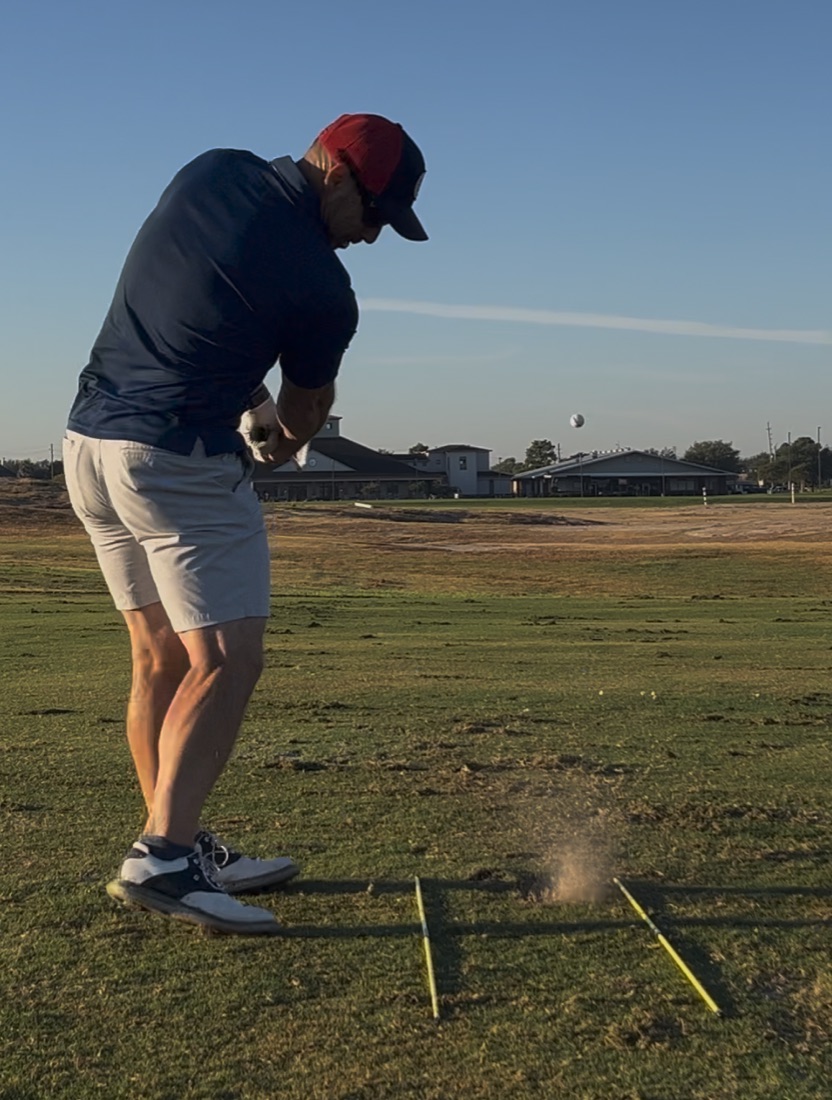
Want to know how to hit your irons higher? Your first instinct is probably to get under the ball and help it up.
That’s exactly what’s making it worse.
The second you start scooping, your low point shifts behind the ball. Now you’re chunking it, thinning it, or catching it fat off tight lies. Maybe you get away with it when the turf is soft, but that’s not a swing — that’s a lucky break.
If your contact is still all over the place, stop here and work through our complete guide to hitting irons consistently first. Trajectory control means nothing if you can’t find the center of the face.
Here’s what actually creates height: speed and delivery — not flipping your hands to add loft.
Why Trying to Lift the Ball Backfires
Most amateurs try to hit irons higher by:
- Leaning back
- Hanging on their trail side
- “Helping” the ball up with their hands
It feels logical. It’s wrong.
When your center stays behind the ball too long, the club bottoms out early. Now you’re either:
- Striking the turf first
- Catching the ball thin
- Flipping the face and adding inconsistent loft
The inconsistency is the giveaway. You’re manufacturing height instead of building it.
Speed Creates Height — Not Launch Manipulation
Clay Ballard demonstrated this on a launch monitor with a 6-iron.
- Swing 1: 75 mph clubhead speed
- Launch: ~15°
- Peak height: ~54 feet
- Carry: 144 yards
- Swing 2: 100 mph clubhead speed
- Launch: ~16°
- Peak height: ~118 feet
- Carry: 204 yards
The launch angle barely changed.
The height doubled.
The only meaningful difference was speed.
Tour players don’t necessarily launch it dramatically higher. They launch it at similar angles — but with much more speed. That speed keeps the ball climbing.
If you’ve been trying to increase height by manipulating launch angle, you’ve been chasing the wrong variable.
Get Your Body Behind the Ball (Without Swaying)
Jason Day explains that high iron shots start with how you load in the backswing.
At the top, you should feel:
- Pressure into the inside of your trail foot
- Your head slightly behind the ball
- Your lead shoulder pointing behind the ball
- Your trail hip turning and “sitting,” not sliding
The distinction is critical: loading is not swaying.
Loading stores energy and sets up a shallow approach.
Swaying moves your low point behind the ball and forces compensations.
If you feel most of your weight in your lead foot at the top, expect a lower flight.
Shallow the Delivery — Don’t Scoop It
Yes, irons require a descending strike.
No, that does not mean chopping down steeply.
To hit irons higher, the club needs to approach slightly shallower so it preserves loft through impact.
At impact:
- Weight is still moving forward
- Spine has a subtle tilt away from the target
- Trail arm is extending through the strike
- The club is not crashing steeply into the turf
If your spine is vertical or leaning toward the target, you’ll trap the ball low.
If you hang back trying to lift it, you’ll blade it.
The goal is forward pressure + shallow delivery.
Build Efficient Speed Without a Longer Swing
Adding height doesn’t require a longer backswing. It requires better sequencing.
Clay Ballard’s “early turn” concept fixes the common arms-only swing. Most amateurs lift the club with their hands and rotate too late. That forces them to muscle the downswing.
Instead, feel like:
- Your shoulders are nearly 90° turned by the time your hands reach chest height
- There is minimal early wrist hinge
- Your hands stop around shoulder height
- Your body is fully loaded
This creates a short, powerful backswing.
On the downswing, move into what Ballard calls the “power position”:
- Club parallel to the ground
- Slightly inside the target line
- Lag retained
- Release happening late
It should feel like your hands are near knee height before the clubhead fires.
That late release is what creates the whip — and the whip creates height.
Drills That Increase Height
1. Load Before You Go (Jason Day)
Step on a club with your trail foot and place another across your chest. Turn back and feel pressure move into your trail leg without sliding your hips.
You’re training:
- Proper loading
- Stable head position
- Coil without sway
2. Tee-It-High Drill
Tee a ball two to three inches high and hit it with a 6-iron.
To strike it cleanly:
- Your spine must tilt slightly away
- Your trail arm must extend
- Your approach must shallow
If you hang back, you blade it.
If you’re steep, you pop it up.
When you can hit it clean off a tee, remove the tee and replicate the motion from the turf.
3. Early Turn Speed Drill
Make swings where your shoulders turn fully by the time your hands reach chest height. Stop the backswing at shoulder height and rotate aggressively through.
Compare this to an arms-only swing.
The speed difference is immediate.
Make Practice Simple & Effective
Don’t run every drill in one session.
Instead:
- Pick one loading drill
- Pick one speed drill
- Blend them into full swings once comfortable
If you have a launch monitor, track peak height.
If you don’t, watch how the ball lands. Higher shots descend steeper and stop faster.
That’s your real-world confirmation.
FAQs
Why do my long irons fly so low?
Usually one of two things:
Angle of attack is too steep
Clubhead speed is too low
Long irons require both shallow delivery and sufficient speed to sustain climb.
Does a longer backswing help?
Not necessarily. A shorter backswing with full shoulder rotation produces more speed than a long arm swing without rotation.
Should I move the ball forward?
A slightly forward ball position can help shallow the attack. Move it too far forward and you’ll risk thin contact. Small adjustments only.
Do I need to swing harder?
No. You need to swing more efficiently. Early rotation and a late release produce speed without extra effort.
Final Thoughts
Height comes from speed and delivery — not from trying to lift the ball.
Load properly.
Shallow the approach.
Create speed through rotation.
When those pieces are in place, the ball climbs on its own.
That’s how you hit irons higher.
Sources
- Jason Day with Col Swatton (Golf Digest) — “How To Hit The High Ball” — Loading behind the ball, spine tilt, shallow angle of attack, and four progressive drills including the turn-shift-rotate sequence
- Clay Ballard (Top Speed Golf) — “This is The REAL Solution to Hitting Your Irons Higher” — Launch monitor demonstration showing speed (not launch angle) as the primary driver of peak height, early body turn for efficient speed, and the power position for lag and late release